Seoul Travel Guide: A First-Timer’s Introduction to Korea’s Capital
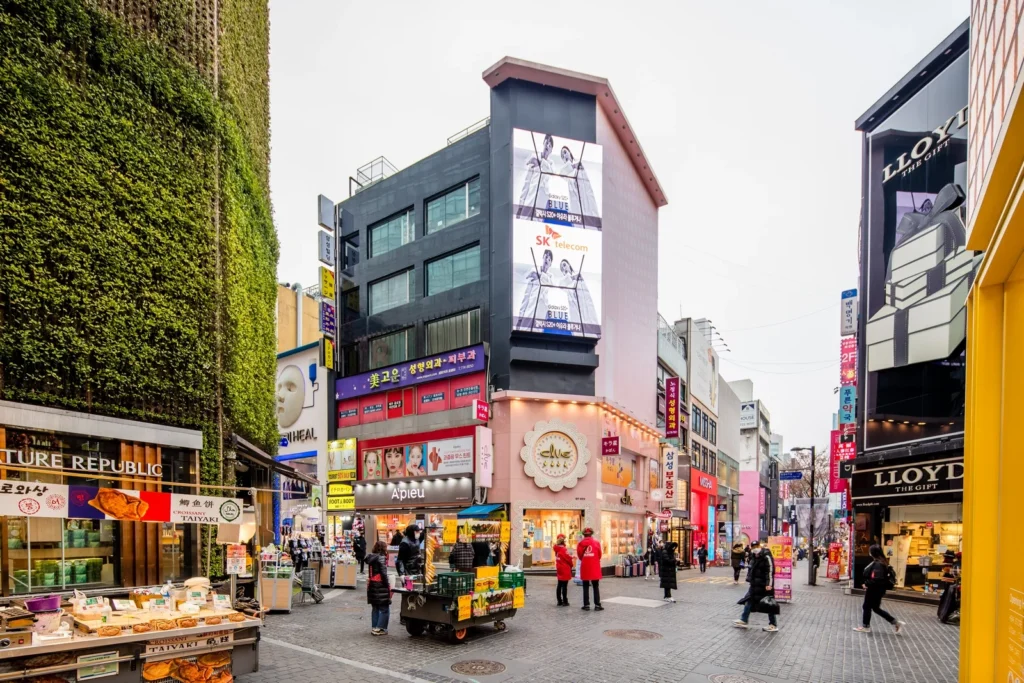
For almost every visitor, Korea begins in Seoul. Home to roughly half the country’s population once you count the surrounding metro area, it’s a city where 600-year-old palaces sit in the shadow of glass towers, where you can start the morning in a hanbok at a royal gate and end the night at a rooftop bar in Gangnam. It can feel overwhelming at first — so here’s how to make sense of it.
A city split by a river
The Han River cuts Seoul in two, and the simplest way to picture the city is north versus south. North of the river (Gangbuk) is the historic heart — palaces, hanok villages, markets, and old neighborhoods. South of the river (Gangnam) is the newer, glossier Seoul of high-rises, designer boutiques, and tech offices. Most first-timers spend the bulk of their time in the north and dip south for a day.
The historic north
Start at Gyeongbokgung, the grandest of the five royal palaces, and time your visit for the changing-of-the-guard ceremony. Just uphill, Bukchon Hanok Village preserves lanes of traditional tiled-roof homes, while Insadong nearby is the place for tea houses, galleries, and crafts. Wander east to Ikseon-dong, a warren of old hanok now filled with cafes and boutiques — one of the city’s most charming pockets.
The youthful west
For energy, head to Hongdae, the university district packed with live music, street performers, and late-night food. The neighboring streets of Yeonnam-dong and Hapjeong have become a cafe-hopper’s paradise. This is where you feel Seoul’s creative, youthful pulse.
The modern south
Cross to Gangnam for upscale shopping and the vast Starfield COEX Mall with its photogenic library. Trend-watchers should make for Seongsu-dong — “Seoul’s Brooklyn” — where old factories have become concept stores and roasteries, and Apgujeong for designer flagship culture.
Views, markets, and food
For the classic skyline shot, ride up N Seoul Tower on Namsan or hike one of the city’s surprising mountains, like Inwangsan. When hunger hits, the city’s markets deliver: Gwangjang Market for old-school bites like bindaetteok and mayak gimbap, Myeongdong for photogenic street food, and any backstreet for Korean BBQ. Don’t leave without a late-night plate of fried chicken and beer (“chimaek”).
Easy day trips
Seoul is a perfect base. The DMZ on the North Korean border is the most popular half-day tour, and the UNESCO-listed Hwaseong Fortress in nearby Suwon makes a great day out (see our Gyeonggi guide for more).
Good to know
- Getting around: the subway is clean, cheap, and bilingual — grab a T-money card at any convenience store. Use Naver Map or KakaoMap rather than Google Maps.
- Best time: spring (cherry blossoms, April) and autumn (foliage, October) are glorious; summers are hot and humid, winters cold but crisp.
- Stay central: base yourself around Myeongdong, Jongno, or Hongdae for easy access.