Busan Travel Guide: Korea’s Coastal City of Beaches and Seafood
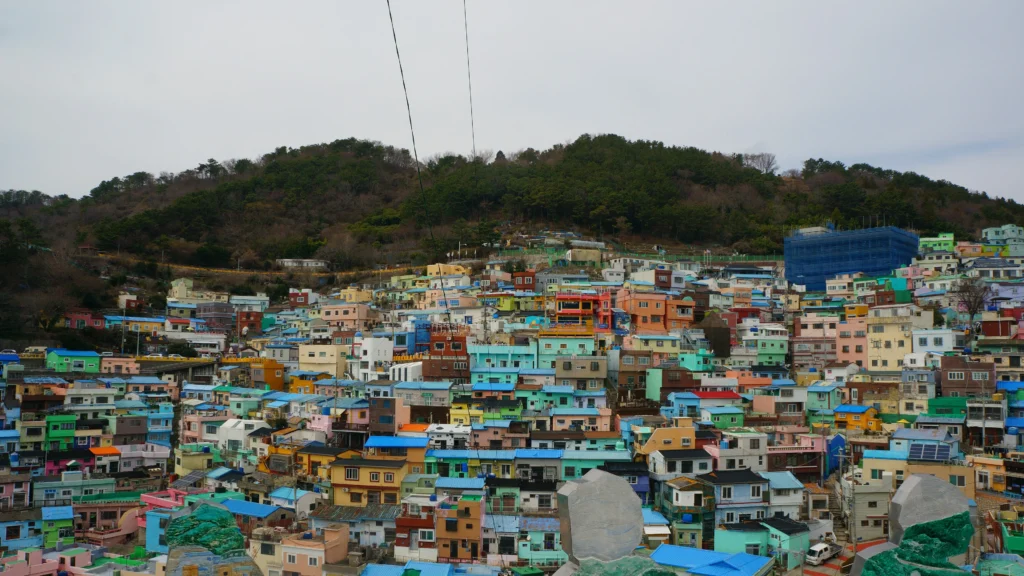
If Seoul is Korea’s pulse, Busan is its deep breath. The country’s second city and biggest port trades palaces for beaches, hillsides of pastel houses, and seafood markets that never seem to sleep. Relaxed, sunny, and scenic, it’s the perfect counterpoint to the capital.
The beaches
Busan is Korea’s beach capital. Haeundae is the famous one — wide, golden, and lined with cafes — while Gwangalli dazzles after dark beneath the lit-up Diamond Bridge. For something calmer, the cliffside Igidae trail and the surf beach at Songjeong are local favorites (see our 3-day Busan guide for more).
Gamcheon Culture Village
Often called “Korea’s Santorini,” Gamcheon Culture Village tumbles down a hillside in a mosaic of brightly painted homes, narrow staircases, murals, and tiny galleries. Go early to beat the crowds and the heat, and give yourself time to get pleasantly lost.
Markets & seafood
Head to Jagalchi Market, Korea’s largest seafood market — pick your catch downstairs and have it served fresh upstairs. The surrounding Nampo-dong and BIFF Square buzz with street food; don’t miss ssiat hotteok, the seed-stuffed sweet pancake born here. Busan’s other signatures are dwaeji gukbap (pork soup) and chewy milmyeon noodles.
Temples & views
One sight you shouldn’t skip is Haedong Yonggungsa, a rare Buddhist temple perched right on the seaside rocks — stunning at sunrise. For skyline views, ride up BUSAN X the Sky at Haeundae or take the seaside Songdo cable car across the bay.
Good to know
- Getting there: the KTX from Seoul takes about 2.5 hours; the metro and buses make the city easy to explore.
- Best time: late spring and autumn for mild beach weather; summer is lively but hot.
- Tip: distances add up — group sights by area (Haeundae east, Nampo/Gamcheon west).